How Long Do Vinyl Tarps Really Last Outside?
Vinyl tarps can last anywhere from a few months to over a decade when used outdoors, depending on the product’s quality, the conditions it faces, and how well it is maintained. There is no single lifespan that applies to every vinyl tarp. A heavy-duty, UV-stabilized vinyl tarp used occasionally in a shaded area may serve you for many years, while a lightweight product left permanently exposed to intense sunlight may degrade much faster. In the UAE, the combination of strong sunlight, high temperatures, dust, and wind creates conditions that test even the toughest outdoor materials.
How Long Do Vinyl Tarps Last Outdoors?
A high-quality vinyl tarp can last for several years under suitable conditions. Some manufacturers of heavy PVC-coated tarpaulins report outdoor lifespans of up to five years or more in printed applications . Others indicate service lives of five years or beyond for PVC tarpaulin products . Industrial PVC-coated polyester membranes, which are a related but distinct category, can last considerably longer—often 15 to 25 years before replacement .
The key phrase is “under suitable conditions.” These figures assume the material is properly installed, not subjected to extreme or continuous abuse, and that the manufacturer’s specifications are followed. Actual performance will vary based on substrate preparation, exposure conditions, and maintenance .
For UAE buyers, it is essential to consult the manufacturer’s specifications for the specific product you are considering. A tarp sold for temporary use will not have the same expected service life as one designed for semi-permanent or permanent outdoor installation.
What Makes Vinyl Tarps Durable?
Vinyl tarps derive their durability from several construction features:
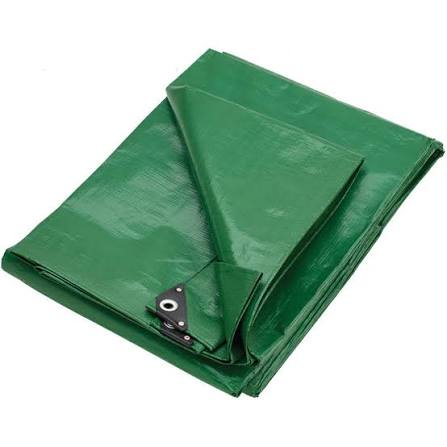
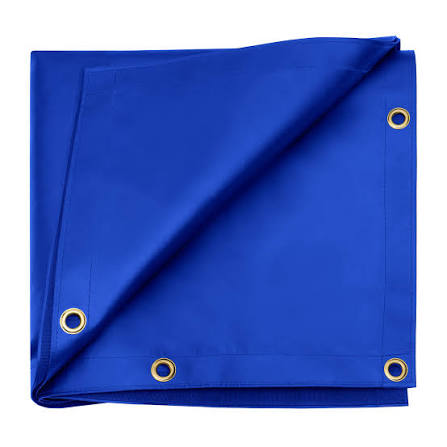
- Vinyl-coated fabric: The base is typically a woven polyester or nylon scrim, coated with polyvinyl chloride (PVC) on both sides. This combination provides tensile strength from the fabric and weather resistance from the vinyl coating .
- Fabric thickness: Heavier vinyl tarps (measured in grams per square meter or ounces per square yard) generally resist wear, tear, and UV degradation better than thinner alternatives. A 900gsm PVC tarp, for example, is built for demanding outdoor applications .
- Reinforced edges: Hems with additional material or rope reinforcement prevent edge fraying and distribute stress from fastening points.
- Strong seams: Heat-sealed or high-quality stitched seams maintain structural integrity under tension and weather exposure.
- Heavy-duty eyelets: Rust-resistant metal grommets, properly spaced and securely attached, prevent tear-out at anchor points.
- UV-resistant materials: UV stabilizers or coatings added during manufacturing slow the degradation caused by sunlight .
- Moisture and abrasion resistance: The PVC coating repels water and resists surface abrasion from dust, sand, and handling.
What Can Shorten the Life of a Vinyl Tarp?
Several factors accelerate the aging and degradation of vinyl tarps:
- Direct sunlight and UV radiation: Prolonged exposure causes fading, brittleness, and eventual cracking of the vinyl surface .
- Extreme heat: High temperatures soften vinyl and accelerate chemical degradation. White and silver tarps reflect more solar radiation than dark colors, keeping surfaces cooler .
- Strong winds: Flapping and whipping stress seams, eyelets, and the fabric itself. Poorly secured tarps can tear loose in gusts.
- Repeated folding: Creasing along the same lines weakens the material over time.
- Abrasion: Rubbing against rough surfaces, dragging across the ground, or contact with sharp edges wears through the coating.
- Sharp surfaces: Protrusions underneath or near the tarp can puncture or tear the material.
- Water pooling: Standing water creates sustained stress on seams and coating, even if the material itself is waterproof.
- Chemicals: Exposure to certain solvents, oils, or pollutants can degrade PVC.
- Incorrect installation: Over-tensioning eyelets, inadequate anchoring, or flat installation that allows pooling all reduce service life.
- Poor storage: Folding a wet or dirty tarp and storing it in a hot, sunny location promotes mildew and material degradation.
How Does the UAE Climate Affect Vinyl Tarps?
The UAE presents a uniquely challenging environment for outdoor materials. Intense sunlight delivers high UV doses year-round, and summer temperatures regularly exceed 40°C. Sand and dust accumulate on surfaces and work into seams and eyelets, causing abrasion. Seasonal rain, though infrequent, can be heavy when it arrives. Wind and occasional sandstorms stress fastening points and can abrade surfaces.
Coastal areas add humidity and salt exposure to the mix, which can accelerate corrosion of metal components and degradation of the vinyl itself.
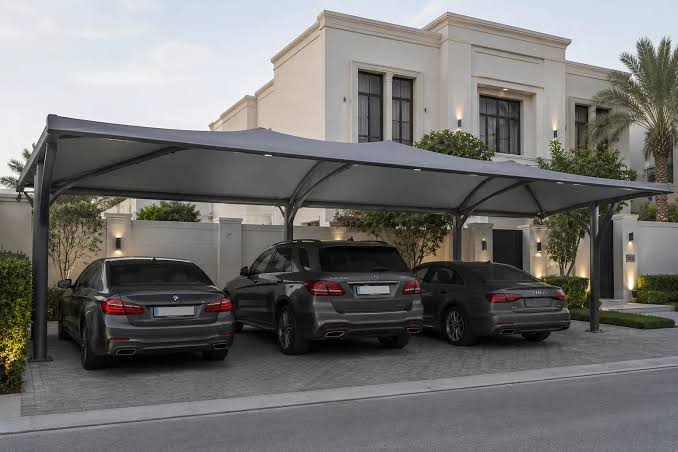
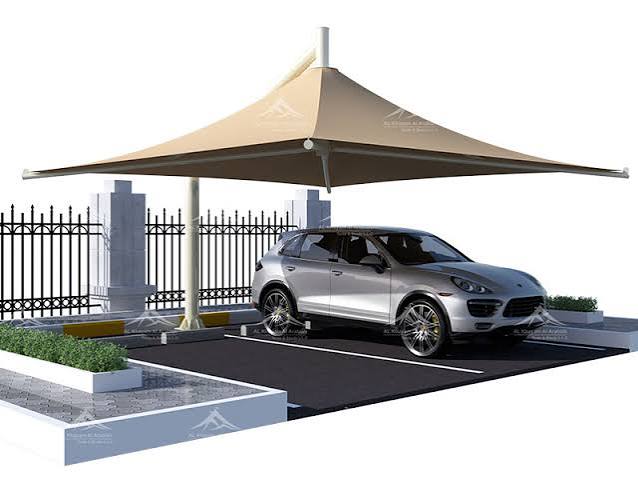
The same tarp will have a very different service life depending on how it is used. A vinyl tarp deployed only during specific events or seasons, then cleaned and stored properly, may last many years. An identical tarp left continuously exposed on a construction site or as a permanent cover in direct sun will age much faster.
Signs That a Vinyl Tarp Needs to Be Replaced
Inspect your vinyl tarp regularly for these warning signs:
- Cracking: Small cracks in the vinyl coating indicate UV degradation and loss of flexibility.
- Brittleness: The material feels stiff and snaps rather than flexing.
- Fading or surface deterioration: Significant color loss or a chalky surface texture.
- Tears: Any rip or puncture, especially near seams or eyelets.
- Damaged seams: Stitching that has pulled through, or heat-sealed seams that have separated.
- Loose or missing eyelets: Grommets that have torn out or corroded away.
- Water leakage: Water passing through areas that were previously watertight.
- Weak or stretched edges: Hem reinforcement that has failed or stretched out of shape.
- Permanent deformation: Stretched or misshapen areas that do not return to their original form.
How to Make a Vinyl Tarp Last Longer
Proper care significantly extends the service life of a vinyl tarp:
- Clean dirt and sand regularly. Use mild soap and water, rinse thoroughly, and allow to air dry .
- Avoid dragging the tarp across rough surfaces. Lift and carry it instead of pulling.
- Keep sharp objects away from the material. Pad corners or protrusions that could puncture the tarp.
- Secure the tarp correctly during windy conditions. Use adequate anchor points and even tension.
- Prevent unnecessary water pooling. Install at an angle for drainage and use proper support .
- Inspect seams and eyelets regularly. Repair small issues before they become major failures.
- Dry the tarp before long-term storage. Moisture trapped in folds promotes mildew and degradation.
- Store it in a cool, dry place away from direct sunlight. Proper storage preserves flexibility and coating integrity .
- Follow the manufacturer’s cleaning and maintenance instructions. Different products may have specific care requirements.
Vinyl Tarps vs Other Tarp Materials
Vinyl tarps occupy a specific position among outdoor covering materials. Polyethylene (PE) tarps are lighter and less expensive, typically suited for shorter-term or lighter-duty applications; some improved PE designs now offer extended lifespans under strong UV conditions . Canvas tarps are breathable and resistant to rot and mildew but are generally water-resistant rather than fully waterproof, and they can be heavy and prone to shrinkage . PVC-coated fabrics, which include vinyl tarps, offer a balance of waterproof performance, durability, and handling characteristics that makes them suitable for truck curtains, industrial tents, marine applications, and other demanding outdoor uses .
The best choice depends on your specific application, exposure conditions, and budget. Vinyl tarps are not universally superior—they are one option among several, each with trade-offs in weight, cost, breathability, and expected service life.
How to Choose a Long-Lasting Vinyl Tarp
Use this checklist when selecting a vinyl tarp for outdoor use in the UAE:
- Intended outdoor application: Will it cover a truck, protect construction materials, serve as a permanent canopy, or something else?
- Material thickness: Heavier vinyl (measured in gsm or oz/yd²) generally offers better durability. Check the manufacturer’s rating for your intended use.
- Fabric construction: Look for a tightly woven scrim with uniform PVC coating on both sides .
- UV resistance: For UAE conditions, UV stabilization is essential. Check manufacturer specifications .
- Waterproofing: Verify that the product is rated as waterproof, not just water-resistant.
- Reinforced corners and edges: These are high-stress areas that benefit from extra material.
- Seam quality: Heat-sealed seams or high-quality stitched and sealed seams are preferable.
- Eyelet quality: Rustproof metal grommets, properly spaced and securely attached.
- Expected exposure conditions: Consider whether the tarp will face continuous sun, wind, abrasion, or chemicals.
- Manufacturer warranty/specifications: Read the product details carefully. Warranty duration is not the same as expected service life—a warranty covers defects, while service life reflects real-world performance under specific conditions.
Vinyl tarps can deliver years of reliable outdoor service when you choose the right product for your application, install it properly, and maintain it consistently. In the UAE’s demanding climate, investing in quality and following a simple care routine will help you get the most from your vinyl tarp.